Not Converting Your Ad Leads? Avoid This Mistake and Use This 14-Day Plan to Fix It
The follow-up you didn’t send
A lead fills out your form on Monday. You text them once on Tuesday, hear nothing back, and figure they’re not interested. Three weeks later, they join the studio down the street, the one that kept in touch.
If that stings, you’re not alone. You paid for that lead, whether through an ad, an Instagram post, or a free class pass, and it slipped away somewhere between teaching your 6am class and closing the front desk at 9pm. It’s not that you didn’t care. It’s that following up by hand, one lead at a time, is a second job nobody has time for.
There’s a second reason follow-ups stop, too: nobody wants to be that business, the one blowing up someone’s phone. So you send one polite text and leave it there, even though far more leads are lost to silence than to too many messages.
That’s the most common mistake we see with ad leads: stopping after one or two follow-ups. You’ve already paid to get that lead’s attention, and a single unanswered text throws most of that spend away. The fix isn’t more ads. It’s a better follow-up plan.
The short answer: for most studio leads, 6 to 8 touches over about 14 days, across text, email, and phone, is a good range, as long as each one adds something new.
Key takeaway: Most leads aren’t lost because you followed up too much. They’re lost because you stopped.
The exit clause: your sequence stops the moment they say yes
Before we get into the day-by-day plan, there’s one rule that makes the whole thing work: every follow-up sequence needs an exit clause. An exit clause is a set of conditions that automatically pulls a lead out of the sequence, so nobody gets a “Still thinking about it?” text the day after they bought a membership.
In LenzVU, the sequence stops on its own the moment a lead:
- Buys a membership or package. They’re a member now, so the sales messages end.
- Books a class. The goal of the sequence is reached, so it steps aside.
- Replies to a text or email. A real conversation takes over, and the lead goes to your team.
- Says no, unsubscribes, or texts STOP. Their choice is honored right away.
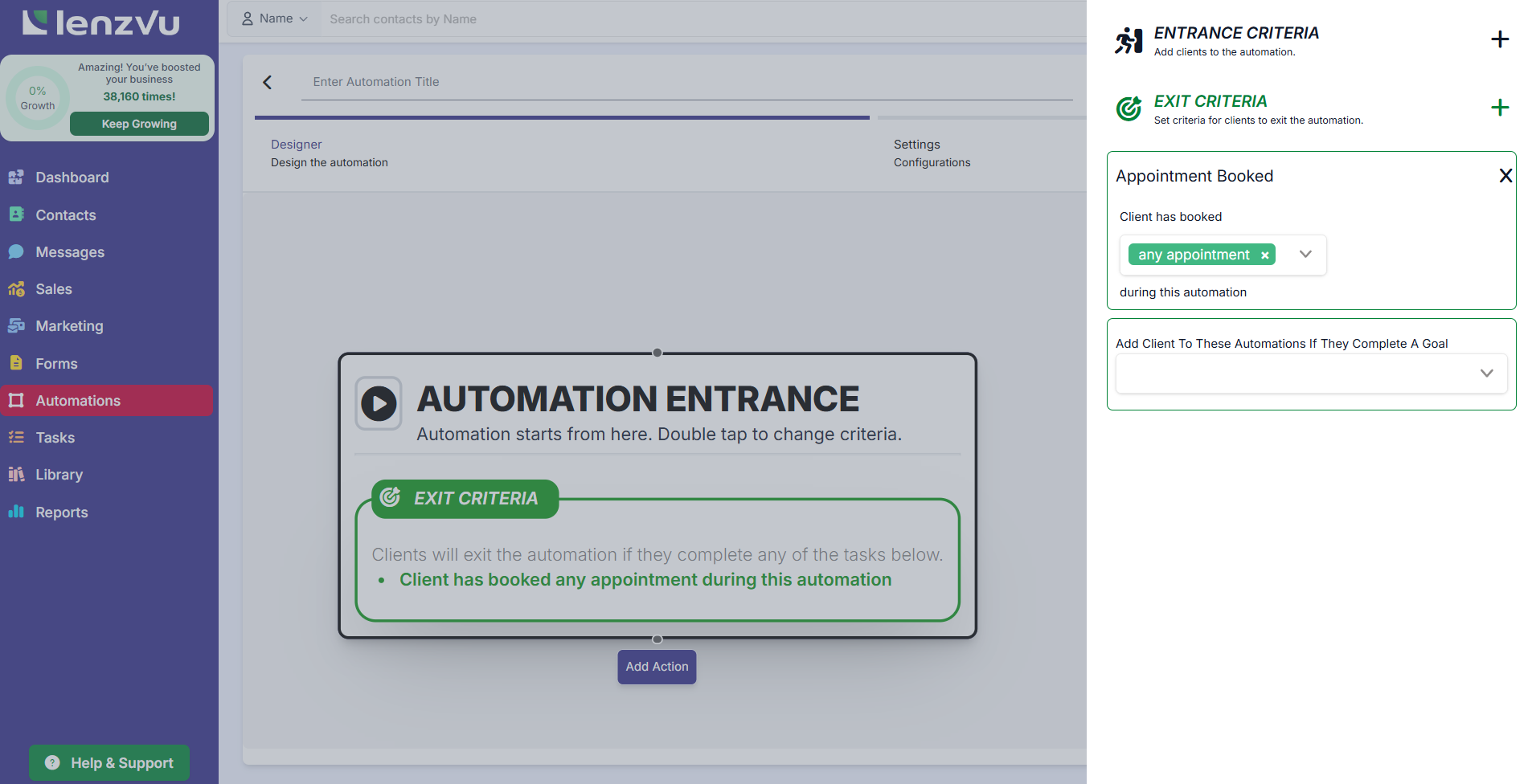
That matters for two reasons. First, new members get a clean welcome instead of leftover sales messages, which protects the trust you just earned. Second, you never have to check who’s bought, who’s booked, and who still needs a nudge before every send.
Without an exit clause, automation just trades one chore for another. You’d be checking your member list every morning to pull new sign-ups out by hand, and apologizing to the one who slipped through and got a “Last chance!” text on their first day.
Set the sequence up once and it manages itself. That’s the point of automation: it should give you time back, not create another list to babysit.
Key takeaway: Set your exit conditions once, and your sequence will never message someone who’s already bought, booked, or replied.
Why one or two follow-ups isn’t enough
When a lead goes quiet, it rarely means they’ve lost interest. People are busy. Your message got buried under work emails, they meant to reply later, or they’re comparing a few studios before deciding.
It often takes several touches before someone is ready to book, yet many businesses stop after one or two. That leaves the door wide open for whichever studio keeps showing up.
Meanwhile, the cost adds up quietly. Every lead that goes cold is money you already spent on ads, flyers, or a free class, walking out the door without a word. The real risk isn’t annoying someone. It’s being forgotten.
Key takeaway: When a lead goes quiet, assume they’re busy, not uninterested, and keep showing up.
When follow-up does become too much
This isn’t a case for spamming your leads. Follow-up starts to feel like too much when it’s:
- Too frequent. Several messages in one day, or a text every day for a week.
- Too repetitive. “Just checking in!” five times with nothing new to say.
- Not how they like to be reached. Calling someone who only ever replies by text, instead of texting them back.
- Ignoring signals. Continuing after someone says no or unsubscribes.
Rule of thumb: every message should give the lead a new reason to reply.
A note on compliance: follow the consent rules for email and text in your area, such as CASL in Canada and the TCPA and CAN-SPAM in the US, and always honor opt-outs right away.
Key takeaway: Frequency isn’t the problem, repetition is. If a message doesn’t give a new reason to reply, don’t send it.
The 14-day follow-up sequence
Here’s a day-by-day plan you can use for every new lead. Each step uses a different channel or angle, so it never feels like the same message on repeat.
| When | Channel | What to send |
|---|---|---|
| Day 0 | Text + email | Within 5 minutes, confirm you got their info and include a booking link. |
| Day 1 | Phone call | A personal call. If it goes to voicemail, leave a short message and send a follow-up text. |
| Day 2 | Answer the most common beginner question: what to expect in their first class. | |
| Day 4 | Text | Share social proof, like a short member story or what most people start with. |
| Day 7 | Address common objections (schedule, fitness level, price) or highlight your intro offer. | |
| Day 10 | Text | A casual check-in with a specific question, not “just checking in.” |
| Day 14 | Text or email | The “breakup” message: “Should I close your file?” It gives them an easy way to answer. |
| After Day 14 | Move them into a monthly long-term nurture list instead of deleting them. |
Key takeaway: Mix channels and angles over 14 days, and move fastest in the first 48 hours, when interest is highest.
What to say at each step
Here’s what each message could sound like for a lead named Jess who asked about Pilates. Swap in your own studio name, classes, and voice.
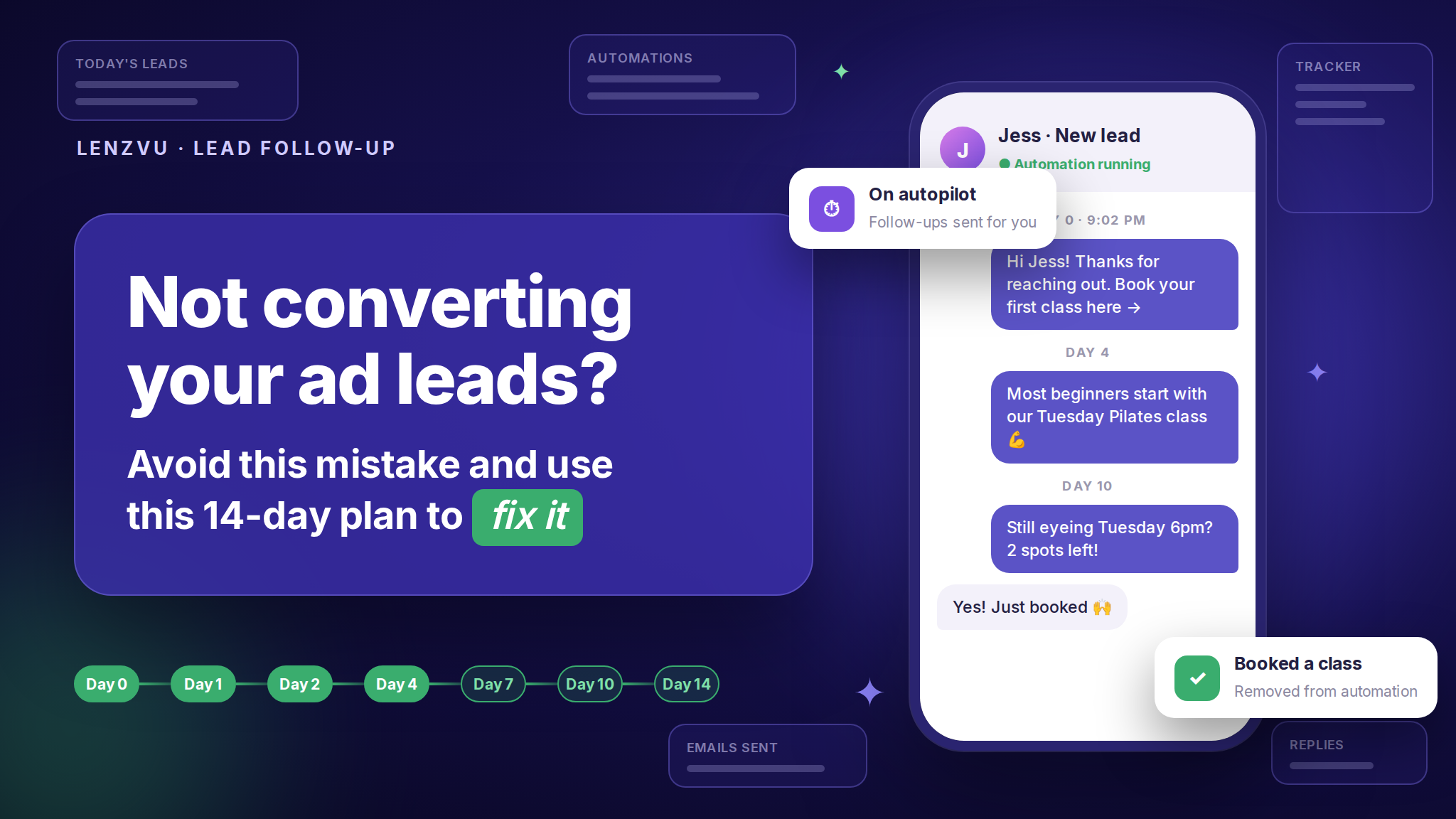
- Day 0 (text): “Hi Jess, thanks for reaching out to [Studio]! Here’s the link to book your first class: [link]. Any questions, just reply here.”
- Day 1 (voicemail): “Hi Jess, it’s Maria from [Studio]. Just calling to see if you have any questions about getting started. I’ll send you a quick text too.”
- Day 2 (email subject): “What to expect in your first Pilates class.” Cover what to wear, when to arrive, and what the class feels like for a beginner.
- Day 4 (text): “Most people new to Pilates start with our Tuesday beginner class. It’s small, and the instructor walks everyone through the basics.”
- Day 7 (email subject): “Short on time? Here’s how our members fit it in.” Address schedule, fitness level, or price, or share your intro offer.
- Day 10 (text): “Hi Jess, are mornings or evenings better for you? I’ll find a class that fits.”
- Day 14 (text): “Hi Jess, I haven’t heard back, so I’ll assume now isn’t the right time. Should I close your file, or keep a spot in mind for you?”
Notice that none of these say “just checking in.” Each one answers a question, shares something useful, or asks something specific, which is what makes a lead want to reply.
Key takeaway: Specific beats generic. A message that names a class, a time, or a question is the one that gets a reply.
How to make each message feel helpful, not salesy
- Switch angles. Move from information to social proof, then answering objections, then an offer, then a direct question.
- Personalize with what you know. Mention the class they asked about or how they found you.
- Keep it short. Texts should be one or two sentences, and emails should be easy to skim.
Here’s the difference a little detail makes:
Instead of: “Just following up!”
Try: “Saw you were interested in Pilates. Our Tuesday 6pm beginner class still has two spots. Want me to save one?”
Key takeaway: Rotate your angles and personalize every touch, so each message feels like a conversation, not a campaign.
When to stop, pause, or switch tracks
- Stop immediately if they say no, unsubscribe, or ask you to stop.
- Pause the sequence when they reply. A real conversation replaces automation, and the lead goes to a staff member.
- Speed up when they show high interest, like clicking pricing links, opening several emails, or visiting your booking page. Flag them for a call that day.
- Switch to nurture if they say “not right now” or never respond. Move them to a monthly value email list.
Key takeaway: Let the lead’s behavior set the pace: stop on a no, pause on a reply, and speed up when they show interest.
Follow-up takes more time than you think
Ask most studio owners why they stop after one or two follow-ups, and the honest answer isn’t fear of being pushy. It’s time.
Each touch looks quick on paper. But before you send anything, you have to find the lead, check where they are in the sequence, remember what you already said, write something new, send it, and make a note so you don’t double up. Even at a few minutes per message, the math adds up fast:
- 8 touches per lead at about 4 minutes each is roughly half an hour per lead.
- 20 new leads a month turns that into around 10 hours of follow-up.
- Busy months like January can double it, right when your classes are fullest.
That’s more than a full workday every month spent on copy-and-paste messages, usually squeezed in after closing, on your phone, when you’d rather be done for the day. And because it’s easy to put off, it’s the first thing to slip when the week gets busy.
The time isn’t the only cost, either. Every hour spent chasing leads by hand is an hour not spent coaching, looking after the members you already have, or simply having an evening off.
Key takeaway: Follow-up doesn’t fail because owners don’t care. It fails because doing it by hand costs hours most owners don’t have.
Running the sequence without living on your phone
Here’s the honest problem with any good follow-up plan: it only works if someone actually does it. Eight touches per lead sounds manageable until you have 30 leads on different days of the sequence, a full class schedule, and a phone full of notes reminding you who to text. That’s usually the week the follow-ups quietly stop.
LenzVU runs the whole thing for you:
- Easy-to-build automations that we walk you through. Our team helps you set up your sequence step by step, and once it’s live, it starts the moment a form is submitted.
- A built-in exit clause. An If/Else step checks whether a lead has booked, bought, or replied, and removes them from the automation automatically, so nobody gets a sales message after they’ve joined.
- Link tracking and email analytics show you which leads are engaged. Learn more about Link Tracking and the Email Campaign Builder.
- The Tracker shows where each lead is and who needs a call.
- The AI Receptionist handles after-hours inquiries, so your Day 0 reply goes out right away.
Instead of spending those 10 hours a month sending messages, you spend a few minutes setting the sequence up once. After that, your time only goes to the moments that actually need you: the Day 1 call, a lead who replies with a question, and the hot leads the Tracker flags for a call today. Everything else runs on its own, and the exit clause makes sure it stops the moment someone buys.
Key takeaway: The best follow-up sequence is the one you never have to remember to run.
Try it for free today.
Quick-reference FAQ
How many times should I follow up with a gym lead?
For most gym and studio leads, 6 to 8 touches over about two weeks works well. Spread them across text, email, and phone, and make sure each one offers something new.
How long should I wait between follow-ups?
Follow up fast at the start, within 5 minutes and again the next day, then space messages out to every few days. By the end of the two weeks, a gap of three to four days is plenty.
Is texting a lead too pushy?
Not if they gave you permission and the text is useful. Keep it short, personal, and easy to reply to, and stop the moment they ask you to.
What do I say in a final follow-up message?
Keep it friendly and give them an easy out, like “Should I close your file?” It often gets a reply from people who meant to answer weeks ago.
Should I ever follow up after someone says no?
Not with sales messages. Respect the no, and only stay in touch if they’ve agreed to hear from you, like through an occasional newsletter.
The bottom line
“Too many” isn’t about the number of messages. It’s about whether each one is useful. A thoughtful 14-day sequence respects your leads and keeps you top of mind until they’re ready to book.
And it doesn’t have to cost you your evenings. With the sequence running on its own, the hours you used to spend chasing leads go back to coaching, your members, and your life outside the studio.
Use LenzVU’s suite to fully automate this process and ensure another lead never gets lost.